
WHAT IS STRESS?
Stress is the body’s reaction to a situation, threat, or person. When we perceive something stressful, the body reacts by secreting hormones such as adrenalin and cortisol, responsible for the temporary surplus of energy we may feel.
There are four recognized characteristics of a stressful situation, grouped together with the acronym N.U.T.S.
- Novelty: the situation is completely new.
- Unpredictability: the situation occurs completely unexpectedly, or its outcome cannot be foreseen.
- Threat to the ego: the situation challenges skills, ego, abilities, and/or is subject to judgment by others.
- Sense of control (limited): feeling that you have little or no control over a situation.
Stress or ANXIETY?
Making the right career choice, moving to another city, going through a break-up with a lover, adapting to a new job are all situations that can lead to a high-intensity reaction over a period of time. At such times, you can feel:
- Palpitations or increased heart rate
- Sweating
- Chills or hot flashes
- Nausea or abdominal discomfort
- Feeling of suffocation, strangeness, or shortness of breath
- Feeling dizzy or lightheaded
- Sensation of numbness or tingling
- Tremors or muscle spasms
Normally, this state is temporary and should disappear as the situation subsides and you regain your bearings. If it does not disappear, and the symptoms intensify to the point of affecting daily life, causing distress and even preventing you from functioning normally, then we can speak of anxiety. Anxiety is thus linked not to the actual situation, but to the anticipation of a situation. Physical and psychological symptoms can even be triggered simply by imagining that a given scenario might occur. Depending on the intensity and duration of symptoms, professional support may be required.
WHAT IS PERFORMANCE ANXIETY?
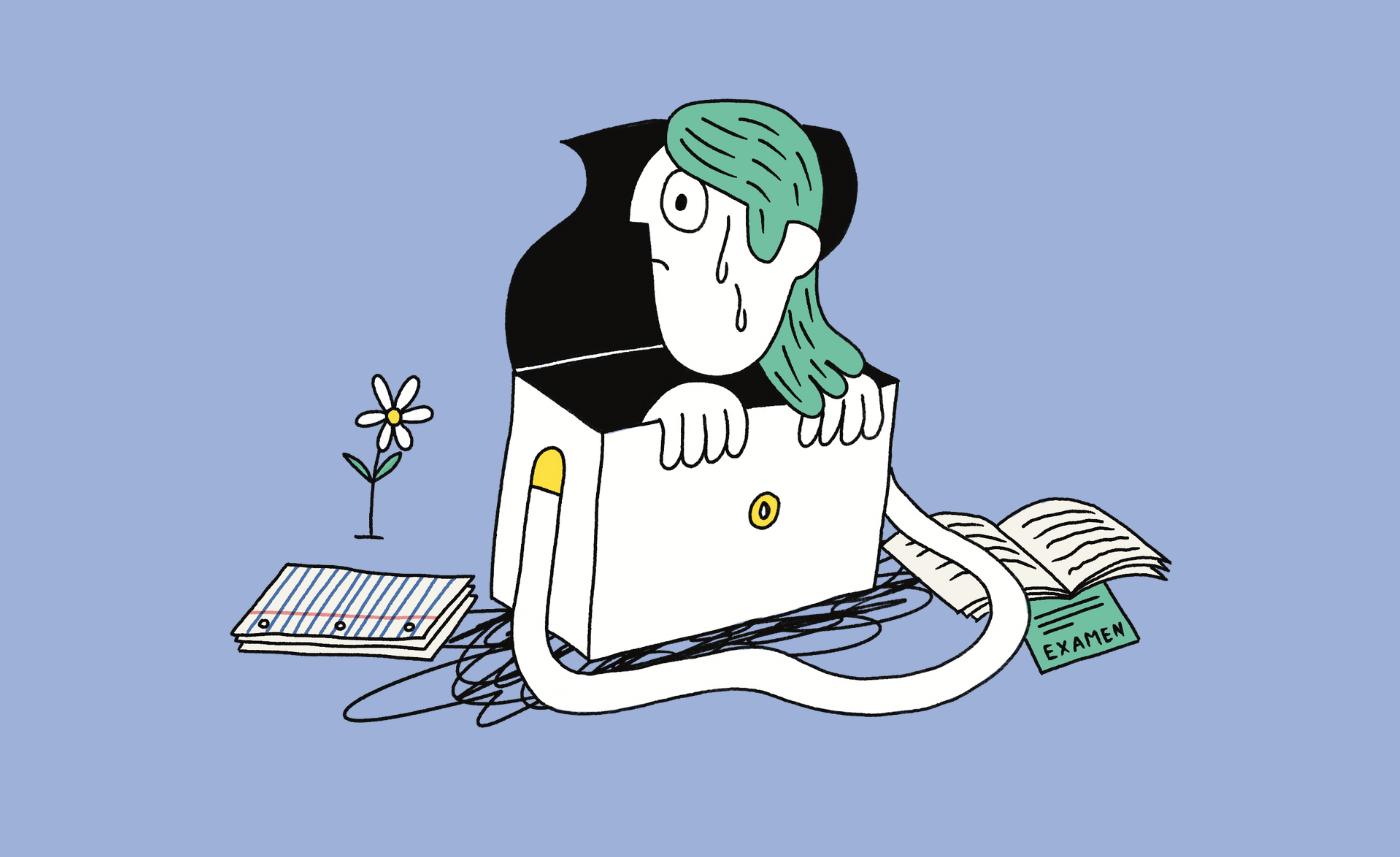
Performance anxiety is excessive concern about performance and the fear of failure, particularly when faced with evaluations or any other situation in which one may feel judged. Some manifestations of performance anxiety can take place in several spheres of life, such as studies, work, or sports.
Examples of events
- High levels of stress, sometimes to the point of panic attacks, the day before an exam.
- Demonstrate strong and constant dissatisfaction with the work of other team members.
- Dramatization of the consequences of poor performance.
- Sudden memory loss despite good command of the subject.
- Experiencing insomnia or somatic problems around deadlines (migraines, digestive problems, muscular tension, etc.).
- Neglecting many areas of life because of the excessive amount of time invested in reducing anxiety.
- Defining your self-worth by what you do (the result), rather than the process and effort involved.
STRESS: ennemy or ally?
Experiencing stress is not always harmful. Stress is adaptive and mobilizes energy by stimulating hormone secretion, which is quite useful when faced with a real threat. If in the short term, this energy is your ally, in the long term, chronic stress is demanding and can also lead to health problems such as digestive or cardiovascular disorders, autoimmune diseases, depression or exhaustion.
As shown in the figure below, stress can have an effect on your performance. It’s possible to find a balance between too little and too much stress for optimal performance. That said, it’s okay to be bored for a while, or to experience a period of fatigue following a stressful situation. The important thing is to be aware of this when it becomes uncomfortable and to put in place the means that will enable you to return to a state of equilibrium where you feel good.

WHAT IS ECO-ANXIETY?
Eco-anxiety refers to the emotions, thoughts, and behaviours we may experience when faced with the realization that climate change and environmental issues are at stake, particularly in relation to collective inaction. These manifestations, which can be very strong at certain times and less so at others, vary from person to person.
Examples of events
- Recurring thoughts about the environment.
- Despair or distress when thinking about the future of the planet.
- Intense emotions and helplessness in the face of current events linked to climate change.
- Fear for your future or that of your loved ones.
- Feeling excessive guilty if you don’t act in an eco-responsible way.
HOW DO YOU COPE WITH STRESS and anxiety?
The options for reducing stress levels are many and vary from person to person.
Breathing and calming technique
Here’s a calming exercise in which we invite you to use your 5 senses. While breathing, divert your attention from what’s stressing you by identifying :
- 5 things you can see
- 4 things you can hear
- 3 things you can feel through touch
- 2 things you can smell
- 1 thing you can taste
Check out this page for more tips on breathing, relaxation and mindfulness.
Being kind to yourself
There are 3 key elements in being kind to yourself.
1. Define how you feel
It’s about taking time out to welcome, observe and identify the emotion or suffering you feel, without judgment. This means accepting when you’re angry, sad or discouraged, quite simply, without making a big deal of it!
2. Remember that you’re not alone in this situation
Suffering is part of the human experience; it’s fleeting and cyclical. Being aware of this helps us to avoid feeling too alone with our burden.
3. Be kind to yourself
Be as kind and empathetic to yourself as you would be to someone you love. Acknowledge that your suffering is legitimate and take the time to ask yourself what would make you feel better right now to get through the situation.
Change your perception of the situation
This involves deconstructing an experienced situation and reconstructing it with a new vision!
1- Find the origin of the stressful situation, according to the acronym N.U.T.S. can be useful: Novelty, Unpredictability, Threat to the ego, Sense of control.
2- For each element, find out where you can influence the situation when possible, and where you need to let go when it’s out of your control.
By allowing your brain to think it has power over the situation, the extent and effort of stress should diminish.
what to remember
The source of stress is identifiable, whereas the source of anxiety is anticipated.
To recognize the source(s) of stress, the acronym N.U.T.S. can be useful: Novelty, Unpredictability, Threat to the ego, Sense of control.
A minimal dose of stress is needed to provide energy, concentration and increase performance.
By being kind to yourself, you can learn to accept or tolerate the discomfort of certain emotions, feelings, or fleeting thoughts.
If stress persists for a long time and becomes intolerable, don’t hesitate to do something about it.
Services at your institution?
If you’re looking for professional help, most cegeps and universities offer a variety of support services for their students. Take a look at this page to find out what’s available at your institution.

A summary of this article is available in PDF format for distribution or printing (in french).
References

Centre d’étude sur le stress humain. (2019) Qu’est-ce que le stress?
Centre RBC d’expertise universitaire en santé mentale. Stratégies pour apprivoiser mon stress
Tel-Jeunes. (2023) L’éco anxiété
Université de Montréal. (2023) Vaincre le stress et l’anxiété: le petit guide qui changera votre vie étudiante
Université de Sherbrooke. (2011) Anxiété de performance
Credits
Illustrations : Mario Fontaine
Contribution to the article :
- France Landry, psychologist
- Isabelle Queval, psychologist
Did you find this content useful?