As part of the research program conducted by Indspire, in collaboration with the Mental Health Commission of Canada, two phases of research were carried out to better understand the mental well-being of Indigenous students in postsecondary education and to identify concrete ways to support them.
Phase 1
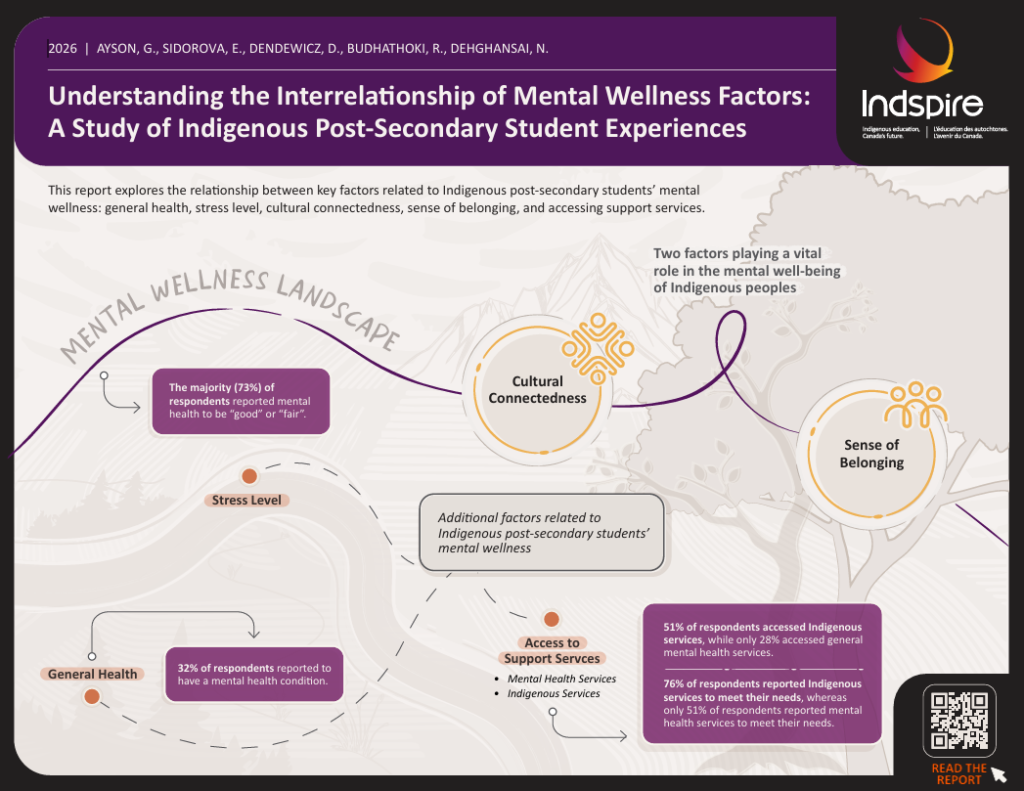
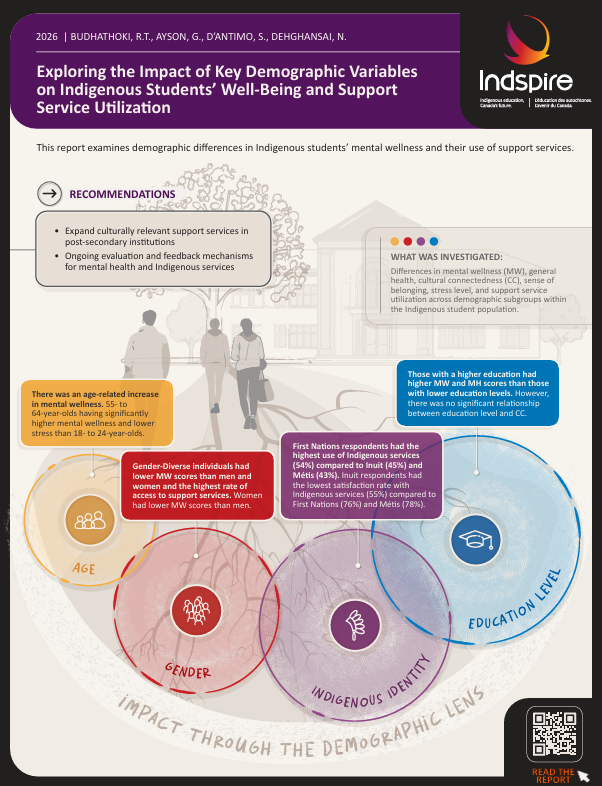
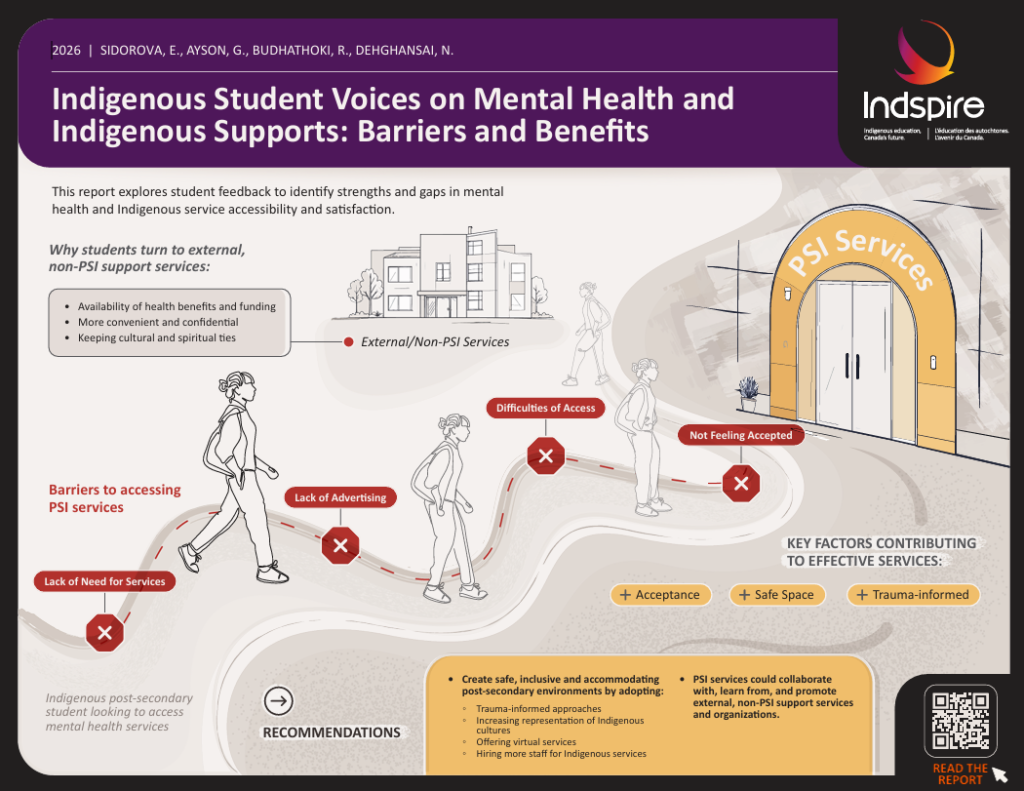
Phase 1 of the program is based on a national survey on mental well-being conducted among former recipients of the “Building Brighter Future” program. This phase collected quantitative and qualitative data on the key factors influencing mental well-being, including cultural connections, a sense of belonging, and access to support services. The results were presented in three separate reports, each providing complementary insights:
- a main report that presents a comprehensive analysis of the experiences and interrelated factors (see Infographic)
- an analytical report that examines the impact of demographic variables on mental well-being and the use of support services (see Infographic)
- a report that highlights students’ voices, emphasizing the barriers and enablers to accessing services (see Infographic)
Phase 2
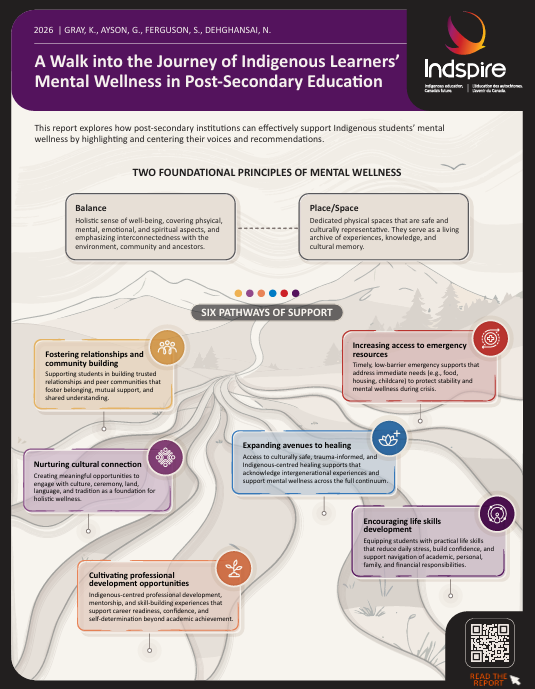
Phase 2 builds on these findings through learning circles as part of a fourth report that highlights the richness of students’ lived experiences and their perspectives on the strengths and limitations of the support provided by institutions. It highlights the need for comprehensive approaches, including culturally grounded support, opportunities for skill development, and guidance on healing and well-being.
Did you find this content useful?